

The Definitive Guide: How to Distinguish Genuine Leather from PU Leather
In the global apparel and accessories market, the term "leather" is often used loosely. While genuine leather is synonymous with luxury, durability, and rich texture, PU (Polyurethane) leather—a synthetic alternative—has made significant inroads due to its lower cost and uniform appearance. As a professional B2B buyer or a quality-conscious consumer, knowing how to distinguish between full-grain genuine leather and synthetic alternatives is critical to ensuring product integrity and making informed purchasing decisions.
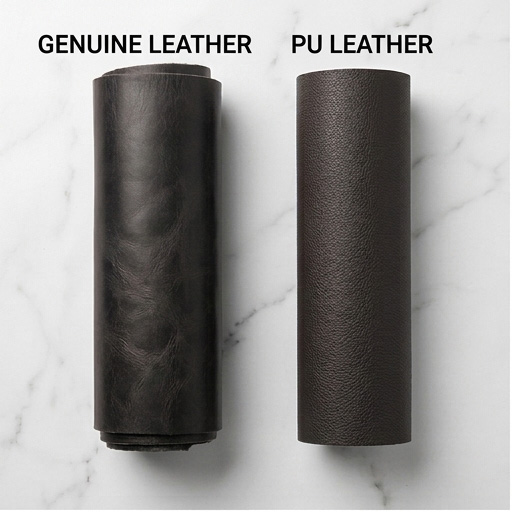
Fig 1: A visual inspection on white marble: On the left, natural variations of genuine leather; on the right, the perfectly uniform pattern of synthetic PU leather. Both are presented side-by-side in this collage.
At richertechs.com, with over two decades of experience in the international export business, we understand that quality and trust are everything. A false claim can tarnish a brand's reputation instantly. This guide provides actionable, professional methods to identify authentic leather from its clever synthetic lookalikes.
1. The Visual Inspection: Pores, Patterns, and Edges
The first and most important step is a careful visual examination. Real leather is the hide of an animal, and as such, it should possess natural imperfections.
Genuine Leather: Look closely for small, non-uniform pores and natural creasing. The grain should appear slightly inconsistent, similar to the Top-Right panel (Fig 2) of our texture collage. If a product claims to be "genuine" but has a perfectly smooth, flawless surface, be skeptical. Real leather has a "grain" that tells a story.
PU Leather: This is a factory-made product. Its surface pattern is embossed to mimic leather, and as a result, it is perfectly regular and repeating, as shown in the Top-Right panel (Fig 2). It lacks genuine pores. If you see the same pattern block repeating exactly, it's PU.
The Edge Test: Authentic leather has a natural, fuzzy, slightly imperfect edge where the fibers of the hide meet the finished surface. PU leather is often constructed by laminating a plastic layer to a fabric backing. This creates a smooth, almost plasticky edge that can sometimes reveal the woven threads of the base fabric underneath.
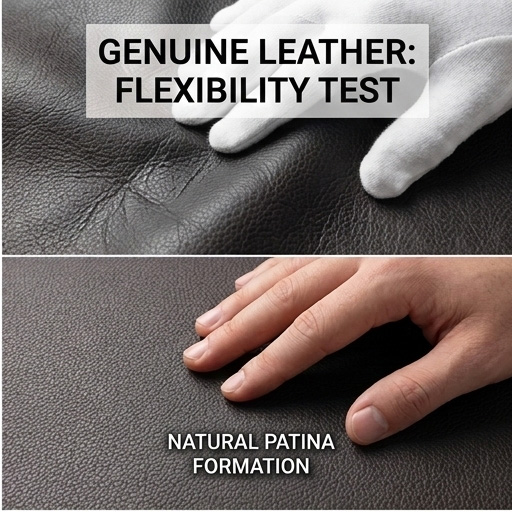
Fig 2: A vertically split macro detail view on white marble (Top-Right of our collage): Top shows authentic, non-uniform pores and natural creasing of genuine leather. Bottom shows a perfect, repeating, synthetic pattern of PU leather with no real pores. A hand is shown pressing down, emphasizing the reaction to pressure.
2. The Scent Profile: "Leather" vs. "Plastic"
The sense of smell is remarkably accurate. Tanned, high-quality real leather has a very specific, rich, and earthy scent—a combination of the hide itself and the tanning agents used. It is a pleasant, timeless aroma.
Genuine Leather: Smells of natural tannins and raw materials. It is difficult to describe but universally recognizable once encountered. It should not smell of chemicals.
PU Leather: Being a polymer-based product, PU leather will often emit a distinct synthetic, chemical, or plasticky smell. The initial odor can be strong, particularly when new.
3. The Tactile Test (Touch) and Wrinkle Reaction
How a product feels and reacts to pressure is another key indicator.
Genuine Leather: Feels warm to the touch. It is supple, flexible, and develops a rich patina over time. The material is strong and does not stretch or break easily.
PU Leather: Can feel colder, smoother, and more like plastic. When pressed with a finger, it often develops a circular depression rather than the dynamic creasing and natural wrinkles observed in genuine leather (refer back to Fig 2, showing a hand pressing both materials). Real leather has natural elasticity.
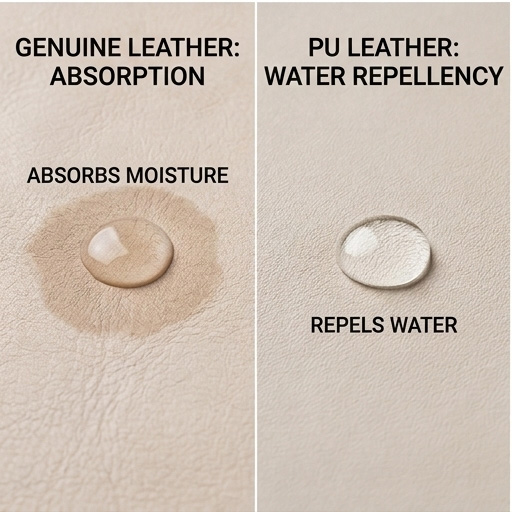
Fig 3: Absorption Test on white marble (Bottom-Left of our collage): A drop of water on light-colored genuine leather has been absorbed, leaving a dark, damp mark. On PU leather, the water is completely repelled, beading up on the synthetic surface.
4. The Liquid Absorption Test (The Quickest Method)
This is a non-destructive and very reliable method, provided the product has not been heavily waterproofed.
Genuine Leather: Is naturally porous. When a drop of water is placed on the surface, it will be slowly absorbed, creating a dark, damp spot, as shown in the Bottom-Left panel (Fig 3) of our collage.
PU Leather: Is inherently water-resistant due to its synthetic polymer coating. Water placed on PU leather will bead up and roll off, as also shown in the Bottom-Left panel (Fig 3). If water beads on a supposedly "genuine" leather product that is not specifically waterproof-treated, be cautious.
Summary: Genuine Leather vs PU Leather Comparison
| Feature | Genuine Leather (Authentic) | PU Leather (Synthetic) |
| Visuals | Natural variations, non-uniform pores, imperfect grain. (See Fig 2, Top) | Perfectly uniform repeating patterns, no true pores. (See Fig 2, Bottom) |
| Scent | Specific, rich, pleasant, earthy aroma. | Synthetic, chemical, or plasticky odor. |
| Touch | Warm, supple, dynamic natural wrinkling. (See Fig 2, Top) | Cooler, smoother, circular depression when pressed. (See Fig 2, Bottom) |
| Absorption | Absorbs liquids (unless waterproofed). (See Fig 3, Left) | Repels liquids; water beads up. (See Fig 3, Right) |
| Durability | Highly durable, resists aging, develops patina. | Less durable, prone to cracking, does not age well. |
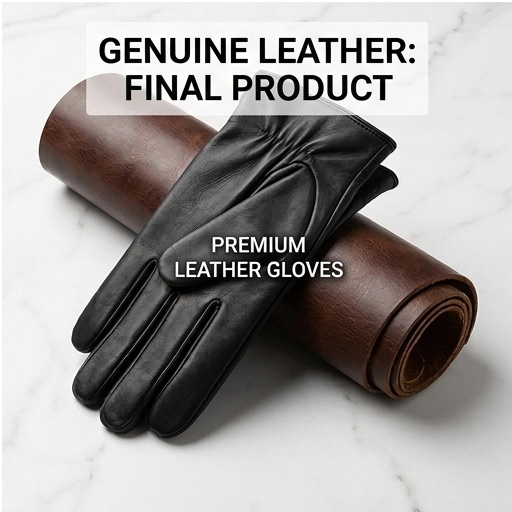
Fig 4: Product Application (Bottom-Right of our collage): A pair of luxurious black genuine leather driving gloves are elegantly draped over a roll of high-quality genuine full-grain leather on white marble. This image emphasizes the rich texture, quality, and practical application of finertechs' real leather products.
Conclusion: Trust Experience and Authenticity
Distinguishing genuine leather from PU leather is not always straightforward, but by combining these observational methods, you can become an expert. In the B2B context, ensuring your suppliers are providing the authentic materials you paid for is vital to maintaining your own brand promise.
At finertechs.com, with a 20-year legacy in the global fur and leather export market, we are dedicated to providing the highest quality, authentically sourced materials. Our meticulous inspection processes and commitment to transparency ensure that when we say "genuine leather," we mean the hide of an animal, tanned with expert care. We build relationships based on trust, quality, and professional expertise.
Are you looking to source verified, high-quality genuine leather products for your next collection? Contact us at finertechs.com today for a custom quote or to request a sample of our certified materials!